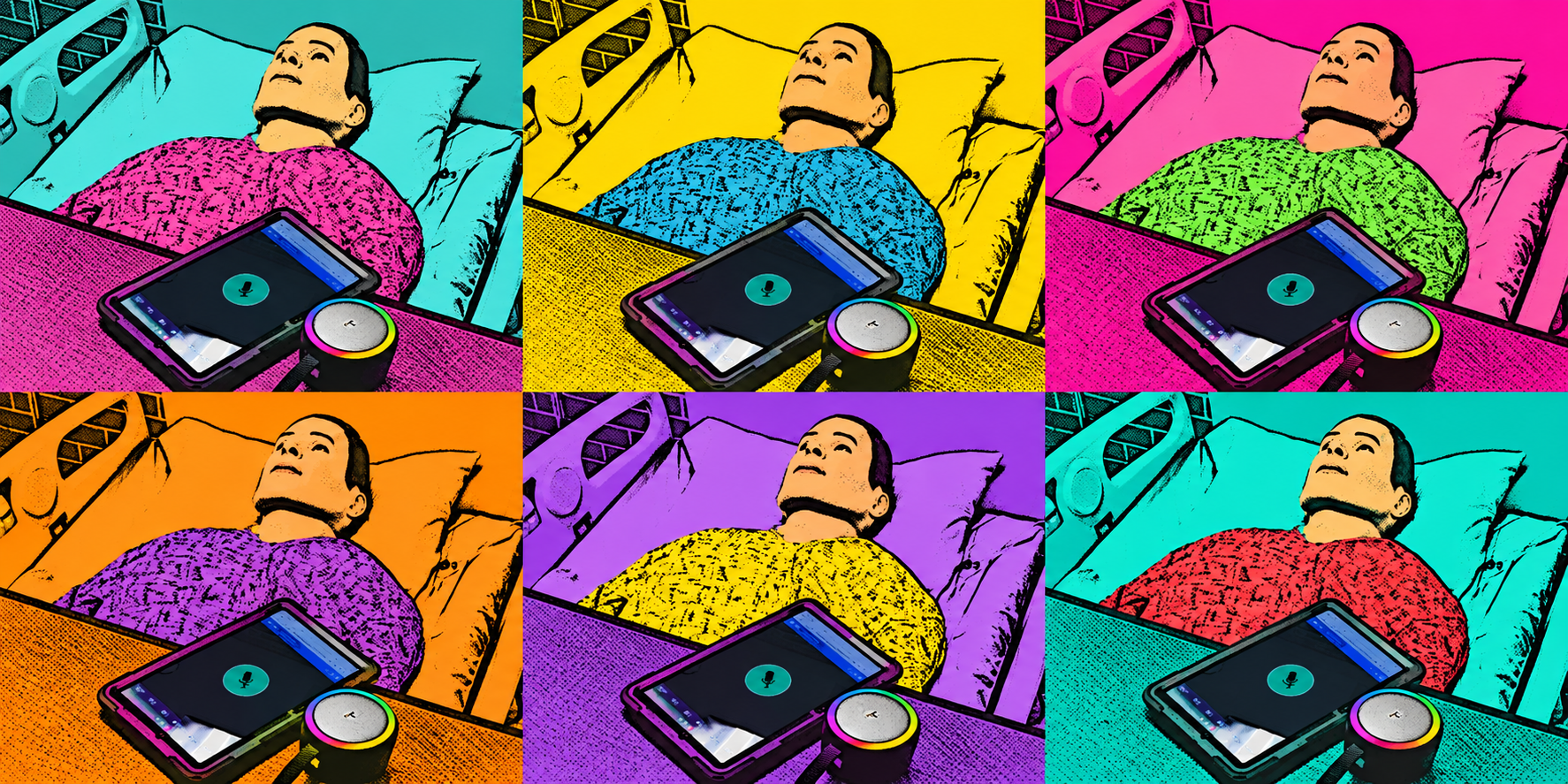
FSU demonstrates how generative AI and iPad-based technologies are enhancing patient communication, clinical skills training, and nursing simulation.
On November 12, 2026, Apple and Florida State University's (FSU) College of Nursing hosted Innovation in Nursing Simulation at Florida State University with iPad, an online event exploring how technology is transforming clinical education.
Among the technologies showcased was SimVox by PCS.ai, an AI-powered patient communication solution that gives existing patient simulators and task trainers a conversational voice.
Dr. Carla Dormeus, Director of Simulation at FSU's College of Nursing, presented the university's approach to integrating iPad, generative AI, augmented reality, and other digital tools into nursing simulation.
As part of the event, Dormeus showcased SimVox through a demonstration of a patient assessment, illustrating how generative AI enables realistic conversations between learners and simulated patients during hands-on clinical training.
Bringing Patient Communication Into the Simulation
One of the event's central themes was the use of generative AI to strengthen therapeutic communication.
For nursing students, developing clinical skills is only part of preparing for patient care. They must also learn to ask appropriate questions, explain procedures, respond to concerns, and interpret information shared by patients.
SimVox brings these interactions into the simulation environment by allowing students to speak directly with simulators. Rather than relying exclusively on instructors to provide the patient's voice, learners can engage in natural conversations with AI-generated responses based on the patient's symptoms, emotions, and medical history.
During her presentation, Dormeus explained how FSU incorporates SimVox into medical-surgical and obstetric scenarios, as well as skills labs involving IVs, wound care, Foley catheterization, and patient assessments.
This approach allows students to practice clinical reasoning and communication alongside hands-on procedures rather than developing these skills in isolation.
Dormeus also highlighted SimVox's automated assessment capabilities, which provide feedback following simulated encounters to support student reflection and faculty review.
For simulation programs, these capabilities can help reduce faculty voice-acting demands while supporting consistent, repeatable learning experiences across student cohorts.
Building on FSU's Commitment to Simulation Innovation
FSU was an early adopter of SimVox, becoming the first institution to purchase the technology in October 2023, less than two weeks after its launch.
In a 2024 interview with HealthySimulation, Dormeus shared what initially drew her to SimVox: the ability to give students realistic patient conversations while performing clinical skills, without requiring changes to the existing curriculum.
As Dormeus explained at the time:
"Before, we were working on the components of patient care separately, now with SimVox, we're including all the elements that are necessary to make them successful when interacting with patients."
She also emphasized the importance of selecting technologies that support educational objectives rather than forcing programs to adapt their curricula around equipment limitations.
FSU has continued to expand its simulation capabilities. During the Apple-hosted presentation, Dormeus described a growing simulation program that includes more than 60 manikins, dedicated skills laboratories, immersive learning spaces, and standardized patient experiences.
The university also reported approximately 1,400 hours of undergraduate simulation instruction and a strategic investment of more than $6 million in simulation facilities and technology.
Connecting Technology With Educational Goals
The Apple event highlighted how FSU combines multiple technologies to support different aspects of clinical learning.
In addition to SimVox, Dormeus discussed iPad-based patient monitoring, sensor-driven airway training, augmented reality for anatomical visualization, handheld ultrasound, and digital documentation tools.
Together, these technologies reflect FSU's approach to creating realistic, measurable, and repeatable learning experiences while making effective use of existing simulation resources.
For SimVox, the educational value extends beyond giving a manikin a voice. The technology allows learners to practice therapeutic communication and clinical judgment as part of the same patient encounter.
Dormeus also discussed the importance of standardizing experiences across student groups and using automated feedback to support faculty assessment.
Importantly, she emphasized that FSU uses SimVox as an enhancement to simulation education, not as a replacement for clinical hours, faculty expertise, or high-quality debriefing.
Advancing the Future of Nursing Simulation
As nursing programs navigate increasing enrollment, faculty demands, and evolving educational expectations, technologies that enhance existing simulation environments offer new opportunities for clinical training.
FSU's experience illustrates how conversational AI can be incorporated into established simulation workflows to make patient interactions more realistic while supporting repeatable practice and learner feedback.
From becoming the first institution to purchase SimVox in 2023 to showcasing the technology during an Apple-hosted education event in 2026, FSU has continued exploring practical ways to bring innovation into nursing education.
We're excited to see Florida State University sharing its work with the broader education community and proud that SimVox was part of the presentation.
Learn more about SimVox and how AI-powered patient communication can enhance your existing simulation equipment.